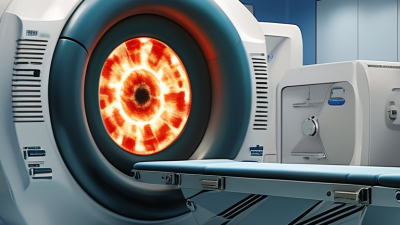
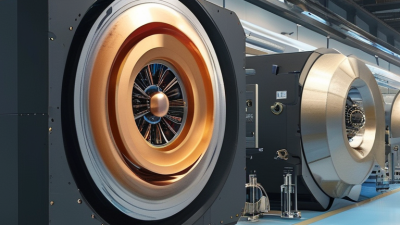
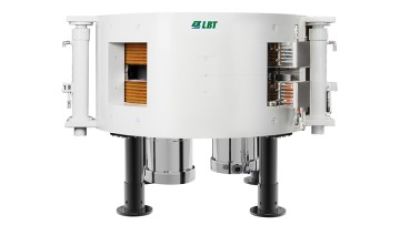
Picking out a 20 MeV cyclotron in 2026 isn’t just about looking at energy ratings—there’s a lot more to consider. The perfect machine needs to align with your facility’s goals, from how it fits into your shielding layout and staffing plans to maintenance routines and your long-term isotope development. For example, if you’ve got a small space, a compact, low-footprint system might be the way to go. But if you’re setting up a regional production hub, you’ll probably need something with a higher beam current and multiple target stations.
Dr. Thomas J. Ruth, a well-known expert in cyclotrons and radiopharmaceuticals, likes to remind folks: “The best cyclotron isn’t necessarily the biggest, it’s the one that matches your clinical mission.” That’s such a key point—every quote you get from companies like IBA, Sumitomo Heavy Industries, Advanced Cyclotron Systems, or ACSI should be filtered through that lens. Think beyond marketing talk—ask questions about the actual beam current, how long it takes to swap out targets, uptime records, how fast they respond to service needs, and whether they’ve got solid commissioning experience documented. Marketing language isn’t the same as real data.
Pay attention to the details—they matter.
Now, a 20 MeV cyclotron can definitely do the job for common production processes, but energy alone doesn’t guarantee good results. Things like target chemistry, extraction efficiency, irradiation stability, and how well your staff are trained all make a huge difference. If you’re thinking about a smaller unit, like a 7 MeV cyclotron, sure, it might handle some limited tasks. But don’t assume it’s a like-for-like substitute without checking what radionuclides you actually need. Ask for samples of production runs, references from facilities similar to yours, and take a good, close look at the control panel, maintenance access points, cooling setup, and radiation safety measures.
Some folks still rely too much on slick brochure promises—that’s a mistake. Being honest about what you really know and what’s still uncertain is smart. No checklist can cover everything, and your local workload data might not tell the whole story either. So, the key thing is to compare real, proven performance—actual daily operations—rather than just optimistic projections or marketing hype.
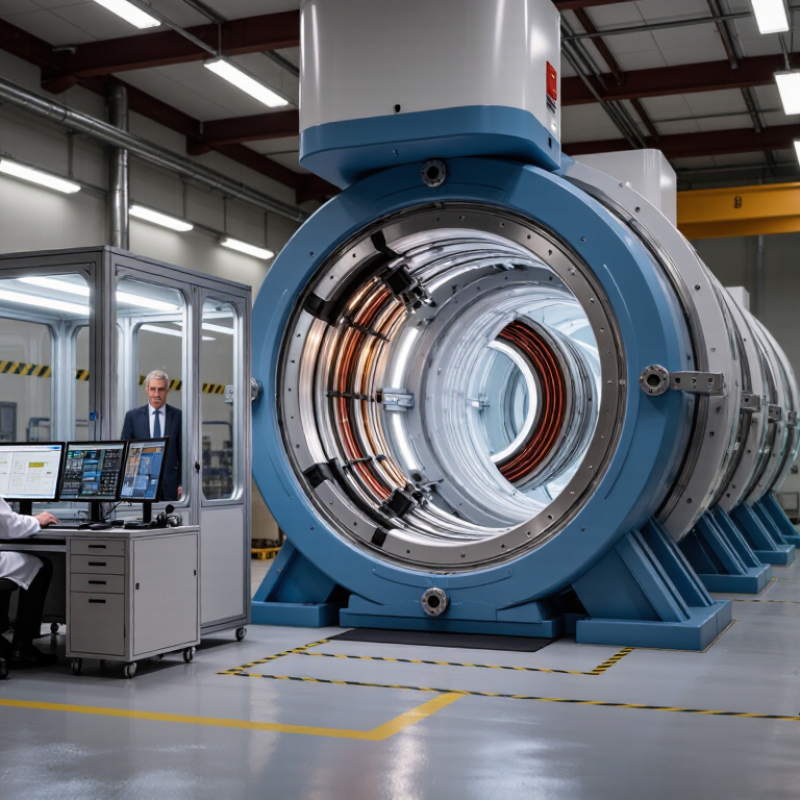
Define the 20 MeV Class: Energy, Beam Current, and Target Capacity
A 20 MeV cyclotron is defined by more than its advertised energy.
In most specifications, 20 MeV refers to the extracted proton energy, not the total electrical input. Energy affects penetration, reaction selection, shielding needs, and target design. An
11 Mev Cyclotron
may suit lower-energy applications, but it cannot automatically replace a 20 MeV system.
Beam current shows how much useful particle flow reaches the target.
A machine rated at 100 microamps may deliver less during routine operation because of extraction losses, tuning, or thermal limits. Ask for guaranteed current under continuous conditions.
Peak current figures can look impressive.
They may not reflect daily production.
Target capacity deserves equal attention.
A target must absorb beam power without overheating, deforming, or contaminating the product stream.
For example, 100 microamps at 20 MeV represents roughly 2 kilowatts of beam power.
That heat requires effective cooling, stable windows, and practical maintenance access.
During equipment evaluations, I would inspect irradiation time, target changeover, cooling-water stability, and measured dose uniformity.
Numbers can mislead.
A higher current is not always better. It may increase downtime if the target system is undersized.
Reviewers should compare verified operating data, acceptance-test procedures, service records, and operator training. I would also question unclear tolerances.
Real facilities rarely operate at ideal laboratory settings.
Expect some adjustment. That is where careful engineering judgment matters.
Match Energy to Isotopes: 18F, 11C, 13N, and 15O Production
Choosing a 20 MeV cyclotron starts with the isotopes your facility will actually produce. Energy alone is not enough. Target material, reaction threshold, beam current, and radionuclide half-life all affect the result.
For 18F, proton irradiation of enriched 18O water commonly uses an energy range near 10–18 MeV. A 20 MeV machine can support this work, with suitable energy degradation and target cooling. 11C production may use nitrogen-based targets and requires careful control of impurities. Its 20-minute half-life leaves little time for transfer and quality testing. 13N has a half-life of about 10 minutes, so automated synthesis and nearby laboratories matter. 15O is even more demanding, with a half-life close to two minutes. Production, purification, and delivery must operate almost continuously.
A 30 Mev Cyclotron may offer broader reaction options, but extra energy can increase unwanted radionuclides and shielding demands. Bigger is not automatically better. I would compare measured yields, target pressure limits, extraction efficiency, and maintenance records from real operating sites. A neat energy table can mislead. Local regulations, trained staff, radiochemical facilities, and waste systems should shape the purchase decision. In practice, a reliable 20 MeV system may outperform a more powerful unit when 18F is the main product and short-lived isotopes are occasional requirements. That judgment should be tested against production logs, not sales projections.
How to Choose a 20 MeV Cyclotron in 2026?
Match proton energy to the production window of common PET isotopes: 18F, 11C, 13N, and 15O.
The chart shows approximate proton-energy windows at the target for representative production routes:
18O(p,n)18F, 14N(p,α)11C,
16O(p,α)13N, and 16O(p,pn)15O.
A 20 MeV proton cyclotron can cover these ranges, but final energy selection depends on target material,
target thickness, energy degradation, radionuclidic purity, and required yield.
Compare Beam Currents: 50–200 μA for Routine PET Manufacturing
How to Choose a 20 MeV Cyclotron in 2026?
For routine PET manufacturing, beam current often matters more than headline energy. A 20 MeV cyclotron operating at 50–200 μA can support different production rhythms, especially for fluorine-18 work. Fluorine-18 has a 109.7-minute half-life, according to the IAEA Nuclear Medicine Resources Manual. That short half-life makes reliable scheduling, rapid transfer, and stable output essential.
A 50 μA system may suit smaller daily batches. At 100–150 μA, facilities gain more scheduling flexibility. A 200 μA system can improve throughput, but only when targets, cooling, shielding, chemistry, and quality control can handle the load.
IAEA Technical Reports Series No. 471 stresses that radionuclide yield depends on target design, irradiation time, beam conditions, and thermal management. Current alone is not a production guarantee. Higher current can create greater target pressure and maintenance demands. Operators should compare measured yield, uptime, target replacement intervals, and routine-dose performance.
The OECD Nuclear Energy Agency’s medical-radioisotope supply analyses also highlight resilience and production continuity as practical priorities. That point is easy to overlook. A slightly lower current with dependable operation may outperform a higher-rated machine that suffers frequent interruptions.
Tips: Request acceptance-test data at 50, 100, and 200 μA. Check cooling performance during extended runs. Ask for realistic daily batch records, not maximum specifications. Leave room for uncertainty; local staffing and target chemistry can change the result.
Assess Target Systems: Gas, Liquid, and Solid Targets at 20 MeV
How to Choose a 20 MeV Cyclotron in 2026?
At 20 MeV, target selection affects yield, maintenance, cooling, and product quality. A practical evaluation should begin with your intended production volume. Gas targets provide clean irradiation and simple material recovery. However, gas density is low, so they may require higher pressure or longer irradiation. Window strength also deserves careful attention.
Liquid targets are flexible and easier to load between runs. They can support efficient chemical processing in compact facilities. Yet, radiolysis, corrosion, and bubble formation may reduce stability. Solid targets often deliver strong yields from small material volumes. Their weakness is heat removal. A poorly designed target can develop hot spots within minutes. I have seen theoretical yield estimates become unrealistic when cooling limits were ignored.
Tips: Compare target performance using real beam current, not only maximum energy. Request thermal data, pressure limits, cleaning procedures, and recovery times. Check whether operators can inspect windows and seals without complex disassembly. Measure the full workflow, including loading, irradiation, transfer, and waste handling. Independent engineering review is valuable, especially for solid targets. Do not overlook ventilation, shielding, interlocks, and local licensing requirements. A reliable system should be maintainable, documented, and tested under routine conditions. Some estimates will remain uncertain. Build a pilot test into the decision.
Evaluate Shielding Against Dose Limits of 20 mSv/Year for Workers
Choosing a 20 MeV cyclotron in 2026 requires more than comparing beam current and equipment size. Shielding must be evaluated against worker dose limits, not promotional claims. A 20 mSv/year limit is commonly referenced for occupational exposure, but local regulations may differ. International recommendations often average this limit over five years. Treat it as a ceiling, not a design target. Set a lower internal goal using the ALARA principle. Ask for realistic workload calculations, including beam current, operating hours, target materials, and expected beam losses. At 20 MeV, neutron production may become important, especially near high-loss targets and extraction areas.
Request a shielding assessment prepared by a qualified radiation protection professional. The report should examine concrete thickness, maze geometry, doors, ducts, cable penetrations, ceilings, and nearby occupied rooms. It should also include occupancy factors for offices, corridors, control rooms, and maintenance spaces. A quiet corridor can still matter. Compare calculated dose rates with measurements from a commissioning survey. Use calibrated neutron and photon instruments, because one detector may not identify every radiation component. Personal dosimeters should support, not replace, fixed-area monitoring.
When comparing cyclotrons, examine shielding performance during normal operation, servicing, startup, and fault conditions. Ask how residual activation will affect maintenance access and worker time. A spreadsheet can look precise while missing an unplanned beam loss. That weakness deserves attention. Require documented assumptions, independent review, and corrective actions when measurements exceed predictions. Choose the design that leaves practical operating margin, not merely one that reaches 20 mSv/year on paper.
Calculate Output, Uptime, and ROI Using 18F Production Demand
Choosing a 20 Mev Cyclotron in 2026 should begin with demand, not brochure specifications. Estimate daily 18F needs from scheduled PET studies, injection activity, decay time, and rejected doses. A useful model includes transport distance and realistic patient cancellations.
Suppose a site requires 18F for 22 studies daily. Each study needs 370 MBq at injection, while decay and handling create additional losses. Add a practical reserve, but avoid excessive overcapacity. Unused activity becomes a direct cost. The calculation should also include target yield, chemical processing time, and batch release requirements.
Uptime changes the business case. Review maintenance records, service response times, spare-part access, and operator training requirements. A cyclotron producing 18F for ten hours daily may appear efficient, yet one unexpected shutdown can disrupt an entire week. Build the ROI model around productive hours, not maximum beam current. Include staffing, utilities, target replacement, quality control, and facility compliance costs.
The break-even point is easy to overstate. My spreadsheet might assume perfect scheduling, but real clinics face delays, failed batches, and uneven demand. Test conservative, expected, and high-demand scenarios. Compare in-house production with qualified external supply, where permitted. Ask whether the 20 Mev Cyclotron can maintain required output during peak mornings without compromising release quality. A lower purchase price is not always a lower lifetime cost.
Verify Compliance with IAEA, GMP, and Medical Device Standards
How to Choose a 20 MeV Cyclotron in 2026?
A 20 MeV cyclotron must be assessed as a regulated production system, not merely a particle accelerator. During commissioning, verify shielding calculations, interlocks, access controls, and radiation surveys. The IAEA Safety Standards Series SSG-46 emphasizes source safety, occupational monitoring, and controlled areas. These checks should appear in signed qualification records.
The target process also needs pharmaceutical discipline. IAEA data lists fluorine-18’s half-life as approximately 109.8 minutes, leaving little room for failed batches or slow release testing. Review target materials, transfer lines, cleaning validation, environmental monitoring, and batch documentation. EU GMP Annex 3 requires radiopharmaceutical manufacturing controls, while ISO 13485:2016 supports a documented medical-device quality system. A Cyclotron Lbt specification sheet may look complete, but it cannot replace site acceptance testing.
Ask for installation qualification, operational qualification, calibration certificates, and software-change records. Confirm alignment with IEC 60601-1 where applicable, plus local radiation and medicinal-product rules. The IAEA Nuclear Medicine Physics Handbook highlights the importance of reliable dosimetry and quality control for diagnostic radionuclides. In practice, inspect the hot-cell interface, measure downtime response, and check whether operators can reach every emergency stop quickly. Small gaps matter. I would also challenge optimistic yield figures; they may exclude target replacement, maintenance, or rejected batches. Use an independent radiation-safety expert before signing the purchase specification.
Cyclotron LB-7SE: Key Features, Applications, and Benefits for Modern Research Needs
A 7 MeV integrated proton cyclotron is designed to support efficient, localized production of fluorine-18 (^18F), a key radionuclide used in positron emission tomography (PET). With a physical half-life of approximately 109.7 minutes, as reported in the IAEA’s *Nuclear Medicine Resources Manual*, ^18F requires dependable production and streamlined handling to preserve activity and maintain scheduling flexibility. The system’s maximum proton energy is aligned with practical ^18F production requirements while avoiding the complexity associated with higher-energy installations.
Its integrated architecture brings the accelerator, target, control, and supporting functions into a coordinated platform. This design can simplify daily operation, reduce manual intervention, and support faster start-up and maintenance procedures. High production capacity is particularly valuable for research centers, hospital-based radiopharmacies, and regional PET networks seeking consistent isotope availability for oncology, neurology, cardiology, and pharmaceutical development studies. Standardized workflows can also improve reproducibility across repeated production runs.
Compact site requirements provide an additional advantage for facilities with limited technical space. By reducing infrastructure demands, including shielding, utilities, and equipment footprint, a 7 MeV cyclotron can be incorporated into existing research or clinical environments with fewer logistical constraints. These characteristics reflect the IAEA’s emphasis on reliable, quality-controlled radionuclide production and support modern PET programs that prioritize operational efficiency, timely access to tracers, and sustainable facility planning.
FAQS
It usually describes extracted proton energy, not total electrical input. Energy affects penetration, reactions, shielding, and target design.
Beam current indicates useful particle flow reaching the target. A machine rated at 100 microamps may deliver less continuously.Peak figures mislead.
A 100-microamp beam at 20 MeV produces roughly two kilowatts of beam power. Cooling, windows, and maintenance access must handle that heat.
Check irradiation time, temperature stability, dose uniformity, changeover time, and recovery procedures. Ask for measured operating data, not only calculated yields.
Gas targets offer clean recovery but may need higher pressure or longer irradiation. Liquid targets load easily but can face radiolysis and bubble formation.Solid targets can run hot.
Request thermal data, pressure limits, cleaning procedures, window strength, seal access, and recovery times. Include loading, irradiation, transfer, and waste handling.
Review shielding calculations, interlock tests, radiation surveys, calibration certificates, and signed qualification records. Confirm emergency stops remain reachable.Small gaps matter.
Compare yields using actual beam current and routine downtime. Include target replacement, maintenance, rejected batches, and release-testing delays.Some estimates stay uncertain.
Conclusion
Choosing a 20 MeV cyclotron in 2026 requires more than comparing nominal energy. Buyers should evaluate beam current, target capacity, operating stability, and compatibility with their intended isotopes. At this energy range, the system should support practical production of key PET radionuclides such as 18F, 11C, 13N, and 15O, while offering suitable gas, liquid, or solid target configurations. Beam currents of approximately 50–200 μA may support routine PET manufacturing, but the best choice depends on production schedules, target yields, maintenance requirements, and facility capacity.
Safety and long-term value are equally important. The cyclotron facility should provide shielding and monitoring designed to help maintain worker exposure below applicable limits, including the commonly referenced 20 mSv per year occupational threshold. Buyers should also estimate output, uptime, consumable costs, maintenance, and return on investment based on actual 18F demand. Finally, documentation and validation should demonstrate alignment with relevant IAEA guidance, GMP principles, medical device requirements, and local regulations.