You know, F18 production really changed the game in modern nuclear medicine. It made functional imaging much more practical, measurable, and accessible than ever before. For example, the F18 Isotope, particularly fluorine-18, is what powers PET tracers that highlight biological activity—so we're looking at actual function, not just anatomy. But here’s the catch: with a half-life of about 109.7 minutes, there's only a tiny window to work with. Every minute counts, no kidding.
Dr. Michael E. Phelps—who’s basically a legend in molecular imaging—once said, “The future of medicine is in the images.” That really hits home, especially when you realize why F18 production became such a cornerstone for PET scans. Reliable cyclotrons, enriched oxygen-18 water, automated synthesis processes, and tight quality control all combined to turn what used to be lab experiments into a consistent, clinical-ready process. The chemistry on paper can look pretty elegant, but in reality, production is far from forgiving.
So, how does a typical F18 production run go? Well, it starts with bombarding an oxygen-18 target with protons. After that, operators carefully recover the fluorine-18 fluoride and transfer it into a validated synthesis module. Then, the radiochemists check every little thing—identity, purity, residual solvents, sterility, endotoxins—you name it—before they finally release it. Honestly, these quality checks matter way more than just the amount produced; they’re what really build trust.
And, I should mention, it hasn’t always been smooth sailing. In the early days, facilities ran into costly delays, struggled with distribution, and had maintenance challenges. Plus, some stories tend to overlook just how much engineers, technicians, and quality teams contributed—so, let’s not forget their huge role.
Fast forward to today, F18 production relies a lot on regional logistics, dependable equipment, and skilled personnel. Because of its short half-life, transportation planning has to be super precise. A tiny hiccup can wipe out an entire production run, which is nerve-wracking. Looking back at the history isn’t just about dates; it’s about understanding how physics, chemistry, manufacturing discipline, and clinical responsibility all grew together to get us here.
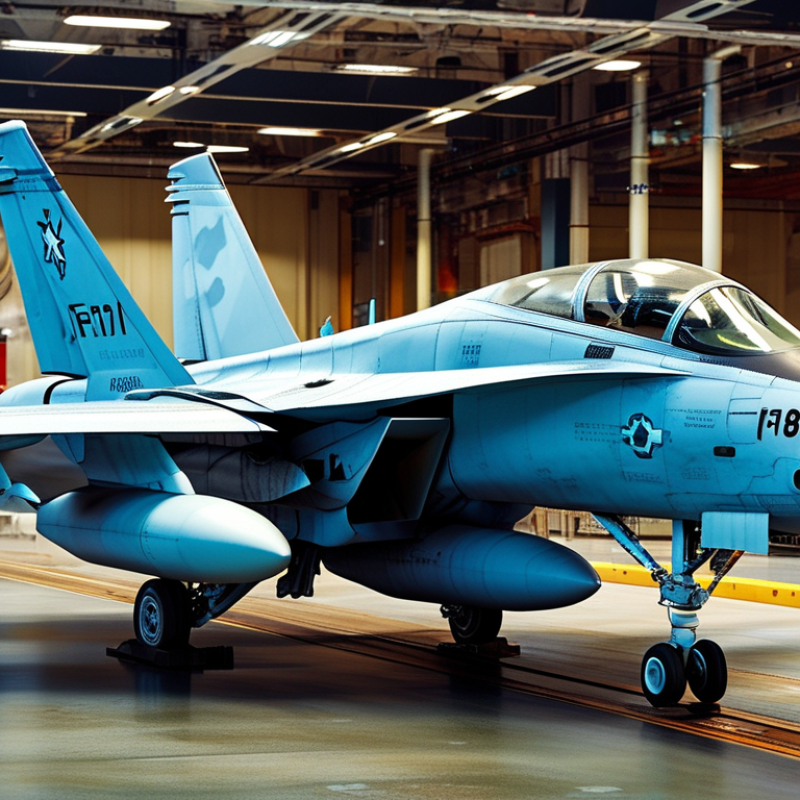
Origins and Development of the F-18 Program
The F-18 program grew from a practical question in the late 1960s. Could a lighter fighter offer strong performance without the cost of a larger aircraft? A land-based prototype answered part of that question. Naval aviation planners then saw potential for carrier operations. The idea was not simple. A carrier fighter needed stronger landing gear, folding wings, and an arresting hook.
In 1975, naval authorities selected a modified twin-engine design for further development. Engineers widened the structure and strengthened key areas around the landing gear. They also adapted the aircraft for repeated launches and recoveries at sea. The first flight occurred in 1978. Fleet service began in 1983. Those dates show a long development path, not an overnight success.
The F/A-18 combined fighter and attack roles in one airframe. Its digital controls helped pilots manage fast changes between missions. Later two-seat and improved variants added range, updated sensors, and greater payload capacity. Yet the early program was not flawless. Weight growth reduced some expected advantages. Maintenance at sea also exposed practical weaknesses. From an engineering viewpoint, that matters. A promising prototype must survive salt, vibration, tight deck space, and human error. The F-18 became influential because its development responded to those pressures, even when the original assumptions needed revision.
Design Features and Engineering Improvements
The F-18 emerged in the 1970s as a compact, twin-engine fighter designed for demanding naval operations. Its production history reflects a practical compromise between speed, range, maintenance, and carrier suitability. The airframe used a wide fuselage and blended wing roots, creating lift while holding fuel and equipment inside a limited footprint. That shape also improved control during slower approaches.
A major design feature was digital fly-by-wire control.
Instead of relying only on direct mechanical links, computers helped translate pilot inputs into stable aircraft movement. Leading-edge extensions strengthened airflow over the wings at high angles of attack. This gave the aircraft strong maneuvering authority during turns and landing approaches. Twin engines added redundancy, though they also increased maintenance demands and fuel consumption. No design choice was free.
Later production versions introduced stronger structures, updated avionics, improved radar systems, and greater internal capacity.
The enlarged development added more fuel and offered better endurance, but it also became heavier. Engineers compensated with reinforced landing gear, revised wings, and more powerful engines. Materials and manufacturing methods gradually improved, reducing some maintenance burdens. Still, claims of easy upkeep can sound overstated. In real service, salt exposure, deck operations, and repeated high-load flights remain harsh tests. The F-18’s lasting value comes from continuous engineering refinement, not a perfect original design.
Major F-18 Production Generations and Variants
The F/A-18 family developed through distinct production generations. The original A/B models entered operational service in 1983, offering single-seat and two-seat configurations. The C/D generation followed in 1987, adding improved avionics, night-attack capability, and stronger mission systems. U.S. Naval Air Systems Command records describe these upgrades as essential for extending the airframe’s combat relevance.
The larger E/F generation began fleet service in 1999. According to U.S. Navy technical data, it provided about 25% more airframe area, 33% more internal fuel, and greater payload capacity than earlier models. The two-seat F variant supported complex strike and training missions. The EA-18G electronic-attack variant reached initial operational capability in 2009, using the E/F structure for specialized electromagnetic operations. It is a different mission tool, not simply a modified fighter.
Production exceeded 2,000 aircraft across domestic and international operators, according to Congressional Research Service assessments and annual defense procurement reports. These sources show a gradual shift from basic air superiority toward multirole operations, carrier defense, precision strike, and electronic support. The numbers are impressive, but production totals can blur important differences between generations. A modernized C model may share the family name, yet its sensors and service life differ sharply from early A models. That distinction is often overlooked.
Top F18 Production History and Key Facts - Major F-18 Production Generations and Variants
| Variant / Generation |
Primary Production Period |
Service Introduction |
Crew |
Main Mission |
Key Design Features |
Approx. Maximum Takeoff Weight |
Production Notes |
| F/A-18A |
1980–1987 |
1983 |
1 |
Carrier-based multirole fighter |
First operational single-seat model; combined air-to-air and air-to-ground capability |
About 23,500 kg |
Initial production version of the F-18 family |
| F/A-18B |
1980–1987 |
1983 |
2 |
Operational conversion and training |
Second cockpit in place of part of the internal fuel capacity; combat-capable design retained |
About 23,500 kg |
Two-seat counterpart to the A model |
| F/A-18C |
1987–2000 |
1987 |
1 |
Multirole fighter and fleet defense |
Improved avionics, night-attack equipment, updated defensive systems and compatibility with newer weapons |
About 23,500 kg |
Most extensively upgraded single-seat legacy version |
| F/A-18D |
1989–2000 |
1991 |
2 |
Training, combat conversion and specialized attack missions |
C-model avionics in a two-seat airframe; later aircraft received specialized reconnaissance and forward-control equipment |
About 23,500 kg |
Final major two-seat legacy variant |
| F/A-18E |
1995–present production period |
2001 |
1 |
Carrier-based multirole fighter |
Larger airframe, increased fuel capacity, stronger landing gear, greater payload and improved range compared with the legacy models |
About 29,900 kg |
Single-seat member of the Super Hornet generation |
| F/A-18F |
1995–present production period |
2001 |
2 |
Multirole strike fighter and operational training |
Two-seat version of the enlarged airframe; supports strike coordination and advanced mission training |
About 29,900 kg |
Two-seat member of the Super Hornet generation |
| EA-18G |
2007–present production period |
2009 |
2 |
Airborne electronic attack and suppression of enemy air defenses |
Derived from the F model; carries electronic-support, jamming and radar-suppression systems |
About 29,900 kg |
Specialized electronic-warfare variant with a dedicated mission operator |
| Legacy International Derivatives |
1980s–2000s |
Varied by operator |
1 or 2 |
Multirole defense, interception and strike |
Export configurations based mainly on A/B or C/D standards, with country-specific avionics and weapons integration |
Generally about 23,500 kg |
Included locally assembled and export-configured aircraft |
Production and configuration overview:
The F-18 family began with the A/B legacy aircraft, advanced through the C/D modernization program, and evolved into the larger E/F generation. The electronic-attack G variant uses the two-seat F airframe as its structural foundation. Exact production totals vary among sources because figures may include prototypes, export aircraft, locally assembled airframes, or aircraft later converted to another configuration.
Manufacturing History and Production Milestones
The F-18 production story began with a practical requirement: one aircraft had to serve land bases and aircraft carriers. Development accelerated during the 1970s, after a lightweight fighter competition reshaped military planning. The first prototype flew in November 1978. Series production followed in the early 1980s, with the F-18A and two-seat F-18B entering operational service in 1983.
Manufacturing relied on distributed assembly, precision machining, and strict carrier-suitability testing. Production teams strengthened landing gear, folding wings, and corrosion protection for harsh sea environments. The F-18C and F-18D appeared later, bringing improved avionics, night-attack capability, and better mission flexibility. These changes were not merely cosmetic. They required revised wiring, software, cockpit equipment, and maintenance procedures.
A larger redesign created the F-18E and F-18F, commonly treated as the next production generation. The new aircraft first flew in 1995 and entered service near the end of the decade. Its larger airframe carried more fuel and supported greater payloads. Production continued for many years, supported by upgrades rather than constant airframe replacement. That approach reduced disruption for operators and factory workers.
Exact production totals can vary between archival sources. Some counts include test aircraft, while others count only delivered operational airframes. That distinction matters. Manufacturing history is rarely perfectly tidy. By the early 2020s, the final aircraft had left the assembly process, closing a production run of more than four decades.
Top F/A-18 Production History and Key Facts
Manufacturing History and Production Milestones
Key facts: The F/A-18 entered production around 1980 after its first flight in 1978. The original A/B/C/D variants reached operational service in 1983. The larger E/F variant first flew in 1995 and reached initial operational capability in 2001. The EA-18G electronic-attack variant reached initial operational capability in 2009. The final U.S. Navy Super Hornet was delivered in 2020. The chart uses calendar years for major production and service milestones rather than annual aircraft output.
Operational Roles and International Users
The F/A-18 evolved from a compact carrier fighter into a flexible multirole aircraft. Its operational value comes from combining air defense, strike missions, reconnaissance, and maritime patrol support. The 2024 FlightGlobal World Air Forces report lists the type among several active international fleets, including Canada, Australia, Spain, Finland, Kuwait, Malaysia, and Switzerland.
Carrier operations demand more than speed. The aircraft must launch from short decks, recover precisely, and withstand repeated arresting-wire landings. U.S. Government Accountability Office assessments describe the newer twin-engine variant as a platform supporting air superiority, strike, electronic attack, and training missions. That role mix reduces the need for separate aircraft, but it increases maintenance complexity. This trade-off is easy to overlook.
International users have employed the F/A-18 in cold-weather bases, coastal air stations, and expeditionary deployments. Finland’s fleet reflects dispersed northern operations, while Australia and Canada use the aircraft across vast maritime environments. FlightGlobal data also shows uneven fleet availability, because aircraft numbers do not equal aircraft ready for combat. Aging airframes need structural inspections and life-extension work. Some public figures remain inconsistent, especially when active, stored, and upgraded aircraft are counted differently. That uncertainty deserves more caution than simple production totals.
Conclusion
The history of F18 production reflects a long process of innovation, adaptation, and operational refinement. Developed to meet demanding naval aviation requirements, the aircraft combined strong performance, twin-engine reliability, carrier suitability, and flexible mission capabilities. Over time, engineers introduced improvements in structure, avionics, flight systems, weapons integration, and maintenance efficiency, allowing the design to evolve through several major generations and specialized variants.
F18 production reached important milestones as manufacturing methods matured and the aircraft entered service with multiple international users. Its roles expanded from air defense and strike missions to training, reconnaissance support, and maritime operations. Although newer platforms have emerged, the aircraft’s durable design, upgrade potential, and extensive operational record have secured its continuing significance. The overall F18 production story demonstrates how careful engineering development and sustained modernization can extend the useful life of a highly capable military aircraft.


