Leave Your Message
0%

China has really become a key player when it comes to sourcing compact cyclotron systems, especially for medical isotopes and scientific research. In this guide, I’ll walk you through Chinese manufacturers who serve buyers around the world—focusing on what really matters: engineering quality, integration skills, and export support. Instead of pretty brochures, we're all about practical advice you can actually use.

When choosing a reliable compact cyclotron, it’s crucial to make sure it fits your facility’s isotope production plans, available space, shielding requirements, and how often you'll need to operate it. Things like acceleration energy, beam current, target compatibility, cooling performance, and ease of maintenance—these are what impact your daily output. They also play a big role in the costs involved in getting everything installed.

A solid move is to have a thorough factory acceptance test before the cyclotron ships out. That way you’ll catch any issues early. Once it’s on-site, site acceptance testing is just as important—don’t skip it.

Look for suppliers who have documented quality systems, experienced engineers, traceable parts, and responsive tech support. Having ISO certifications can give you confidence, but make sure to verify what they actually cover and whether they’re still valid. It’s also smart to ask for references of past installations, training plans, spare parts lists, and realistic timelines for delivery. Remember, a quick sales pitch or a short video isn’t proof of long-term uptime or reliability.

Now, about that name “Compact + Cyclotron”—sounds straightforward, right? But trust me, buying one isn’t simple. You’ll need to review local regulations, import rules, radiation safety, and licensing with professionals who really know the ins and outs. No manufacturer is perfect; even good ones might have limited overseas support or documentation that’s not super clear. So, I’d suggest taking a careful look at their technical specs, total lifecycle costs, how well they communicate, and what kind of after-sales support they genuinely offer. For buyers around the globe, the best partnership comes from working with companies that have proven manufacturing experience and are upfront about their limitations—plus, support that’s measurable and reliable.

Bottom line: don’t rush it. Do your homework, ask questions, and go for a supplier you can trust to be there when you need them.
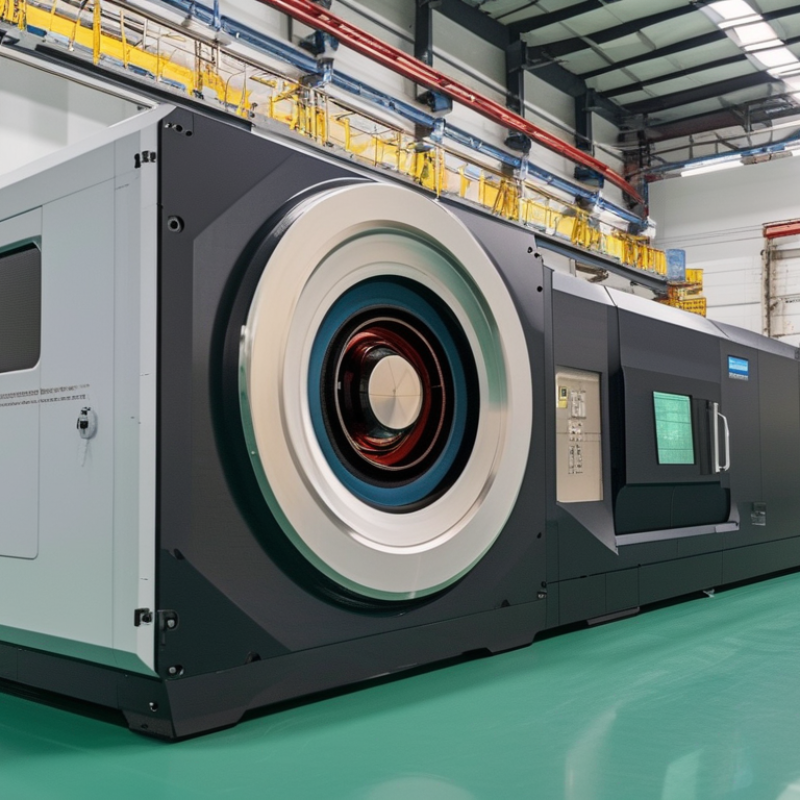
China Top Compact Cyclotron Manufacturers for Global Buyers

Compact Cyclotrons: Definition, Applications, and Core Technologies

Compact cyclotrons are Compact Particle Accelerator systems designed for reliable, localized isotope production. They accelerate charged particles through a magnetic field and radio-frequency electric field. Medical models commonly operate between 9 and 18 MeV. They can produce fluorine-18, carbon-11, and other positron-emitting isotopes for PET imaging.

The IAEA’s 2023 global perspective report estimates more than 40 million nuclear medicine procedures occur worldwide each year. That demand makes compact systems valuable near hospitals and regional imaging centers. Fluorine-18 has a half-life of about 109.7 minutes, according to IAEA nuclear data. Short transport windows matter. A target station must therefore manage beam current, cooling, pressure, and radiation shielding with little delay.

Core technologies include iron or superconducting magnets, RF cavities, vacuum pumps, extraction systems, and automated target handling. Negative-ion extraction can simplify beam delivery and reduce activation risks. Buyers should inspect uptime records, service response, target compatibility, and operator training. Footprint alone is not enough. A smaller machine may still need serious shielding, ventilation, and maintenance space. That trade-off is easy to underestimate. For Chinese manufacturers serving global buyers, documented testing, traceable components, and compliance with local radiation regulations remain stronger evidence than attractive specifications. Some technical claims also deserve independent verification.

China Top Compact Cyclotron Manufacturers for Global Buyers

Compact Cyclotrons: Definition, Applications, and Core Technologies

Compact medical cyclotrons are relatively small particle accelerators designed to produce radioisotopes close to hospitals and radiopharmaceutical facilities. The chart compares representative proton energies commonly used for producing major PET radionuclides. These energy levels support applications in oncology, cardiology, neurology, and molecular imaging.

Values are representative operating energies for established PET radionuclide production routes and may vary according to target material, reaction design, beam current, and facility requirements.

China’s Compact Cyclotron Manufacturing Landscape

China’s compact cyclotron manufacturing landscape is expanding with hospital and regional radiopharmacy demand. Grand View Research estimated the global cyclotron market at about USD 207 million in 2023, with steady growth expected through 2030. China’s advantage is practical: shorter supply chains, competitive engineering, and growing experience with compact medical systems.

Many Chinese manufacturers now develop machines in the 10–18 MeV range. These systems can support common positron-emitting radionuclides for PET applications. Cabinet dimensions matter. A unit must fit through corridors, elevators, and shielded rooms. Technical buyers should examine beam stability, target capacity, radiation shielding, cooling design, and remote diagnostics. The IAEA’s 2023 Nuclear Technology Review stresses reliable local access to radiopharmaceutical technology. That point is often more important than headline energy ratings.

The landscape is capable, but not uniform. Some suppliers provide strong documentation and service networks; others still need deeper validation experience. That difference deserves attention.

Tips: Request factory acceptance records, uptime data, maintenance intervals, and reference-site feedback. Check whether quality documents match the buyer’s local requirements. Do not judge performance from brochures alone. A small footprint can hide difficult servicing. Also, currency, shipping, installation, and operator training can change the real project cost. Industry estimates remain imperfect, so buyers should compare at least three technical proposals.

Key Capabilities of Leading Chinese Cyclotron Manufacturers

Leading Chinese cyclotron manufacturers increasingly compete through engineering depth, not only lower purchase prices. Their core capabilities include compact magnet design, automated target systems, shielded structures, and stable beam control. A 2024 MarketsandMarkets assessment projects the global cyclotron market to expand at roughly 6% annually, driven by PET imaging and radiopharmaceutical production. This growth rewards suppliers that can deliver reliable output in limited hospital spaces.

Experienced manufacturers typically provide proton energy ranges suited to common medical isotopes, including fluorine-18 and carbon-11. They also integrate remote diagnostics, programmable controls, and radiation monitoring. For buyers comparing Cyclotron Lbt solutions, practical details matter: target replacement time, cooling-water stability, access for maintenance, and operator training. A smaller footprint can simplify installation, but it may restrict future upgrades.

The IAEA emphasizes quality assurance, preventive maintenance, and trained personnel in cyclotron-based radiopharmaceutical production. Chinese suppliers with export experience often support factory acceptance testing, installation validation, and documented service procedures. However, technical files can still feel uneven. That deserves scrutiny. Buyers should request beam-current records, uptime evidence, spare-parts schedules, and local compliance documents before signing. A polished demonstration is useful, but long-term service data is more convincing.

How to Compare Compact Cyclotron Models and Specifications

Comparing compact cyclotron models starts with the isotope and production target, not the machine’s footprint. A unit designed for routine fluorine-18 work may not suit other short-lived medical isotopes. Check acceleration energy, beam current, target capacity, and extraction method. These specifications affect yield, processing time, and daily workload.

Look beyond peak performance. Ask for measured output under realistic operating conditions, such as an eight-hour production shift. Review target cooling, vacuum stability, power consumption, and automatic control functions. A model with higher current may sound attractive, but it can demand stronger cooling and more maintenance. Small details matter. Request commissioning records, acceptance-test procedures, and service-response terms from each manufacturer. Independent test data is more useful than polished brochures.

Shielding and installation requirements also deserve careful comparison. Examine the room layout, radiation protection calculations, ventilation, water systems, and local approval process. Experienced suppliers should explain these interfaces clearly. For global buyers, confirm electrical standards, documentation quality, operator training, spare-parts availability, and remote diagnostics. Total cost includes installation, calibration, consumables, and downtime. I would not choose the cheapest quotation without checking its support history. That judgment can be uncomfortable, but a compact system is still a complex industrial asset. Specifications may look complete while hiding practical limits. Ask difficult questions before signing.

Safety, Quality Standards, and Regulatory Compliance

For global buyers, a compact cyclotron is more than a particle accelerator. It is a radiation-producing medical system requiring documented engineering controls. The IAEA reports over 40 million nuclear medicine procedures worldwide each year, increasing pressure on reliable isotope supply. A 7 Mev Cyclotron may support selected short-lived radionuclides, but its value depends on validated targets, beam stability, and safe maintenance access.

Buyers should request shielding calculations, emergency-stop tests, door interlock records, and radiation survey results. IAEA General Safety Requirements Part 3 sets international expectations for radiation protection and dose limitation. IAEA Safety Standards Series SSG-46 also addresses medical-use facilities and operational controls. These references do not replace national licensing. They provide a practical baseline for technical evaluation.

Quality evidence should include factory acceptance testing, site acceptance testing, calibration certificates, and full component traceability. ISO 9001 supports controlled processes, while ISO 13485 may be relevant when the equipment enters a medical-device quality system. Radiopharmaceutical production also requires applicable GMP controls, including cleaning records and batch documentation. Ask for measured uptime, not optimistic brochures. A small gap in training can become a serious weakness. I would also inspect service response during a live installation, because paperwork alone cannot reveal every operational risk.

Procurement, Installation, Training, and After-Sales Support

China Top Compact Cyclotron Manufacturers for Global Buyers

For Pet + Cyclotron projects, procurement should begin with clinical demand, not catalogue size. The IAEA reports that nuclear medicine supports tens of millions of procedures worldwide each year. This growth makes reliable isotope access increasingly important. Buyers should verify target energy, beam current, shielding design, footprint, and local regulatory documentation. Ask for factory acceptance test records and radiation-safety calculations. A compact unit still needs careful room planning. Door width, ceiling height, cooling water, ventilation, and backup power can delay installation.

Installation quality affects daily reliability. Experienced suppliers should provide site surveys, foundation drawings, commissioning protocols, and acceptance testing. Training must include operator controls, maintenance routines, emergency procedures, and production quality checks. The IAEA’s Human Health Series emphasizes trained personnel and documented quality systems in nuclear medicine. Practical training matters. Operators should test real workflows, not only watch presentations. After-sales support should define response times, spare-parts access, remote diagnostics, and annual preventive maintenance. One weak point remains common: buyers may underestimate consumables and local engineering support.

Tips: Request a five-year total-cost estimate. Include shipping, installation, training, service visits, and replacement parts. Check references from facilities with similar workloads. Compare measured uptime, not promotional claims. A thoughtful procurement team should also challenge its assumptions; the smallest machine is not always the most economical choice. Sources: IAEA Nuclear Technology Review and IAEA Human Health Series.

A Global Buyer’s Framework for Selecting a Chinese Supplier

Selecting a Chinese compact cyclotron supplier requires more than comparing quoted prices. A global buyer should examine technical capability, quality controls, and export experience together. Request a complete specification sheet covering beam energy, current stability, target compatibility, shielding interfaces, and expected uptime. Ask how each value was measured. Numbers without test conditions can mislead.

Factory evidence matters. Review production records, calibration certificates, material traceability, and software validation documents. A capable supplier should support factory acceptance testing with agreed procedures and measurable pass criteria. Video inspections help, but an on-site audit reveals practical details, such as cable labeling, spare-parts storage, and cleanliness around sensitive assemblies. Small details matter. Confirm installation requirements, site radiation assessments, operator training, and commissioning support before signing. Service response also needs definition: remote diagnosis, replacement-part lead times, and escalation contacts should appear in the contract.

Do not judge reliability from one successful demonstration. Request references from facilities with similar energy demands and operating schedules. Check whether the supplier can provide English documentation and consistent technical communication across engineering and service teams. Total cost includes shipping protection, import preparation, validation, maintenance, and future upgrades. A low initial quote may hide expensive integration work. I would also challenge optimistic delivery promises, because custom targets and regulatory reviews can change schedules. My framework is not perfect; it can overvalue paperwork when real operating data is limited. Therefore, combine documents with witnessed testing, independent technical review, and a payment plan tied to verified milestones.

China Top Compact Cyclotron Manufacturers for Global Buyers — A Global Buyer’s Framework for Selecting a Chinese Supplier
Evaluation Dimension Compact Cyclotron Configuration Typical Technical Data Global Buyer Relevance Evidence to Request from the Supplier Recommended Assessment
Primary Application Medical radioisotope production Routine production of short-lived radionuclides such as fluorine-18, carbon-11, nitrogen-13, and oxygen-15, depending on target and beam configuration. Suitable for PET radiopharmacy, hospital networks, and regional isotope-production centers. Application list, irradiation records, target specifications, operating references, and dose-yield data. High Priority
Proton Energy Class Low-energy compact system Approximately 9–12 MeV proton energy; commonly used for fluorine-18 production with suitable enriched-water targets. Appropriate for local PET isotope production where a compact footprint and moderate capital cost are important. Measured extraction energy, energy tolerance, beam stability data, and target compatibility statement. Verify by FAT
Proton Energy Class Medium-energy compact system Approximately 18–35 MeV proton energy; supports a broader range of medical and research isotope reactions than low-energy systems. Useful for centralized isotope production, multi-isotope programs, and higher operational flexibility. Validated reaction list, beam-current range, target cooling capacity, and production-yield test reports. High Priority
High-Energy Option Compact high-energy proton system Approximately 60–70 MeV proton energy; generally requires more substantial shielding, cooling, power, and facility infrastructure. Consider when the buyer needs broader isotope coverage, research capability, or regional production capacity. Facility layout, shielding calculation, beam-loss analysis, cooling-water requirements, and power-consumption data. Project Specific
Beam Current Medical production beam Typical compact medical systems operate from several tens to several hundred microamperes, depending on energy, target type, and duty cycle. Higher current can improve production capacity but may increase target heat load and maintenance requirements. Continuous and extracted-current measurements, stability graphs, duty-cycle definition, and target thermal limits. Compare Net Output
Beam Extraction Internal or external extraction External extraction is generally preferred for flexible target installation, maintenance access, and multi-target configurations. Important for buyers planning future isotope expansion or multiple target stations. Extraction layout, beam-transfer efficiency, maintenance procedure, target interface drawings, and spare-parts list. Design Review
Target System Liquid, gas, or solid target assembly Common target materials include enriched water for fluorine-18, nitrogen gas for nitrogen-13, and specialized solid targets for selected research isotopes. Target selection determines isotope range, production yield, chemical processing requirements, and operating cost. Target volume, pressure rating, cooling method, window material, chemical compatibility, and replacement interval. Application Critical
Reliability Operational availability A well-engineered medical production system should provide documented uptime, preventive-maintenance intervals, and recovery procedures for common faults. Downtime directly affects isotope supply, patient scheduling, and return on investment. At least 12 months of operating records, mean-time-between-failure data, mean-time-to-repair data, and service logs. Demand Records
Radiation Safety Shielding and interlock package Typical installations require reinforced-concrete or equivalent shielding, access interlocks, emergency stops, radiation monitors, and beam-loss protection. Local regulatory approval and facility construction costs depend heavily on the radiation-safety design. Shielding calculations, radiation survey results, interlock schematic, safety PLC documentation, and local compliance support plan. Mandatory
Electrical and Utility Requirements Hospital or industrial installation Requirements commonly include three-phase electrical power, cooling water or a closed-loop chiller, ventilation, compressed air where applicable, and controlled-room access. Utility compatibility can determine whether an existing facility can accept the system without major modification. Load list, peak and average power consumption, heat rejection data, cooling specifications, room temperature range, and installation drawings. Confirm Before Quote
Automation and Control PLC, HMI, remote diagnostics, and data logging Modern systems commonly include recipe management, alarm history, vacuum monitoring, magnet-current control, interlock status, and beam-parameter logging. Automation reduces operator workload and supports traceability, troubleshooting, and production repeatability. Control-system architecture, cybersecurity policy, software backup method, user-access levels, and remote-support procedure. Recommended
Quality Management Manufacturing and documentation control ISO 9001 certification is a useful baseline; ISO 13485 may be relevant when the equipment is supplied within a medical-device quality framework. Document control, traceability, change management, and corrective-action processes reduce project and service risk. Current certificates, scope of certification, supplier-audit records, nonconformance procedure, calibration records, and welding or pressure-vessel documentation where applicable. Audit Required
Factory Acceptance Test Pre-shipment performance verification FAT should cover vacuum performance, magnet operation, RF stability, beam extraction, current measurement, interlocks, alarms, and target-system operation. A clear FAT protocol limits disputes and confirms that the delivered configuration matches the contract. Signed FAT protocol, calibrated instruments list, acceptance tolerances, video evidence where appropriate, and punch-list closure plan. Contractual
Site Acceptance Test On-site commissioning and qualification SAT should confirm installation, radiation safety, beam parameters, target performance, operator training, and production repeatability at the buyer’s site. Site conditions can affect actual performance even when factory test results are satisfactory. SAT procedure, commissioning schedule, acceptance criteria, training records, radiation-survey report, and final as-built documentation. Mandatory
Service and Spare Parts Long-term technical support Critical spares may include RF components, vacuum pumps, seals, sensors, power supplies, control modules, and target windows. Availability of local or regional support is often more important than the initial equipment price. Spare-parts matrix, recommended stock level, response-time commitment, engineer coverage, preventive-maintenance plan, and training scope. Commercially Critical
Export and Regulatory Support International project readiness Documentation may need to support customs clearance, import licensing, radiation protection review, electrical compliance, and local medical or nuclear-regulatory approval. Incomplete documentation can delay installation and prevent lawful operation in the destination country. Export classification, packing list, certificates of origin, conformity documents, technical file index, and experience with the destination regulator. Verify Early
Commercial Evaluation Total cost of ownership Compare purchase price together with construction, shielding, utilities, installation, validation, training, service, consumables, target replacement, and decommissioning costs. The lowest quotation may not deliver the lowest cost per usable dose or isotope batch. Five- to ten-year operating-cost model, energy consumption, maintenance rates, consumables forecast, warranty terms, and upgrade pricing. Use Weighted Scoring
Technical ranges in this framework are general compact-cyclotron benchmarks rather than claims about any unnamed supplier. Buyers should require documented test results, independent verification, and destination-country regulatory review before placing an order.

FAQS

: What should buyers evaluate before purchasing a compact cyclotron?

: Start with clinical demand, isotope needs, target energy, beam current, and expected workload. Catalogue size can mislead. The smallest system may not be the cheapest choice.

What safety documents should suppliers provide?

Request shielding calculations, emergency-stop test records, door-interlock tests, and radiation survey results. These documents show whether key engineering controls were tested. Paperwork is helpful, but it cannot reveal every operational weakness.

Does international guidance replace national approval?

No. International guidance offers a useful safety baseline, but local licensing requirements still apply. Confirm permits before shipment, installation, and operation. Rules differ by location.

What quality records are important?

Ask for factory acceptance testing, site acceptance testing, calibration certificates, and component traceability. Cleaning records and production batch documents may also be required. Keep every record accessible.

What room conditions can delay installation?

Check door width, ceiling height, floor strength, cooling water, ventilation, and backup power. A compact unit still needs careful planning. Small oversights become expensive.

What should installation and commissioning include?

The supplier should complete a site survey, provide foundation drawings, and follow documented commissioning procedures. Acceptance testing should confirm safety, performance, and operating stability. Real measurements matter.

What training should operators receive?

Training should cover controls, maintenance routines, emergency actions, and production quality checks. Operators should practice real workflows instead of watching presentations only. Practice exposes confusion.

How should after-sales support be assessed?

Define response times, spare-parts access, remote diagnostics, service visits, and preventive maintenance. Request measured uptime from similar facilities, not optimistic brochure claims. I would inspect live support during installation. That weakness is easy to miss.

How can buyers estimate the real cost?

Prepare a five-year estimate covering shipping, installation, training, service visits, consumables, and replacement parts. Include local engineering support and possible facility changes. Costs can drift. Compare references from facilities with similar workloads.

Conclusion

This guide offers global buyers a practical overview of the compact cyclotron industry in China, beginning with the equipment’s definition, clinical and research applications, and core technologies. It explains how compact cyclotrons support radioisotope production, medical imaging, and related scientific work, while highlighting the manufacturing capabilities commonly found among leading Chinese suppliers, including engineering design, system integration, quality control, and customized solutions.

The article also presents a clear framework for comparing models, considering energy range, target capacity, automation, reliability, maintenance requirements, and facility compatibility. It reviews safety systems, quality standards, regulatory compliance, installation, operator training, documentation, spare parts, and after-sales service. By evaluating technical performance, supplier experience, communication, delivery capability, lifecycle costs, and support resources, buyers can make a more informed decision and select a dependable Chinese partner for their compact cyclotron project.


Samantha

Samantha

Samantha is a seasoned marketing professional at a leading high-tech enterprise specializing in high-end nuclear medical equipment. With a strong background in the field, she possesses an exceptional understanding of the company's products and their applications. Since joining the team, Samantha......
Previous How to Choose the Right Cyclotron Equipment for Your Needs?