

Marketing Campaign

0102030405
β vs α: Why Are There Two Different Routes in Radionuclide Therapy?
2026-09-16
☢️ Beta and alpha emitters are both used in radionuclide therapy—but they deliver radiation in very different ways.
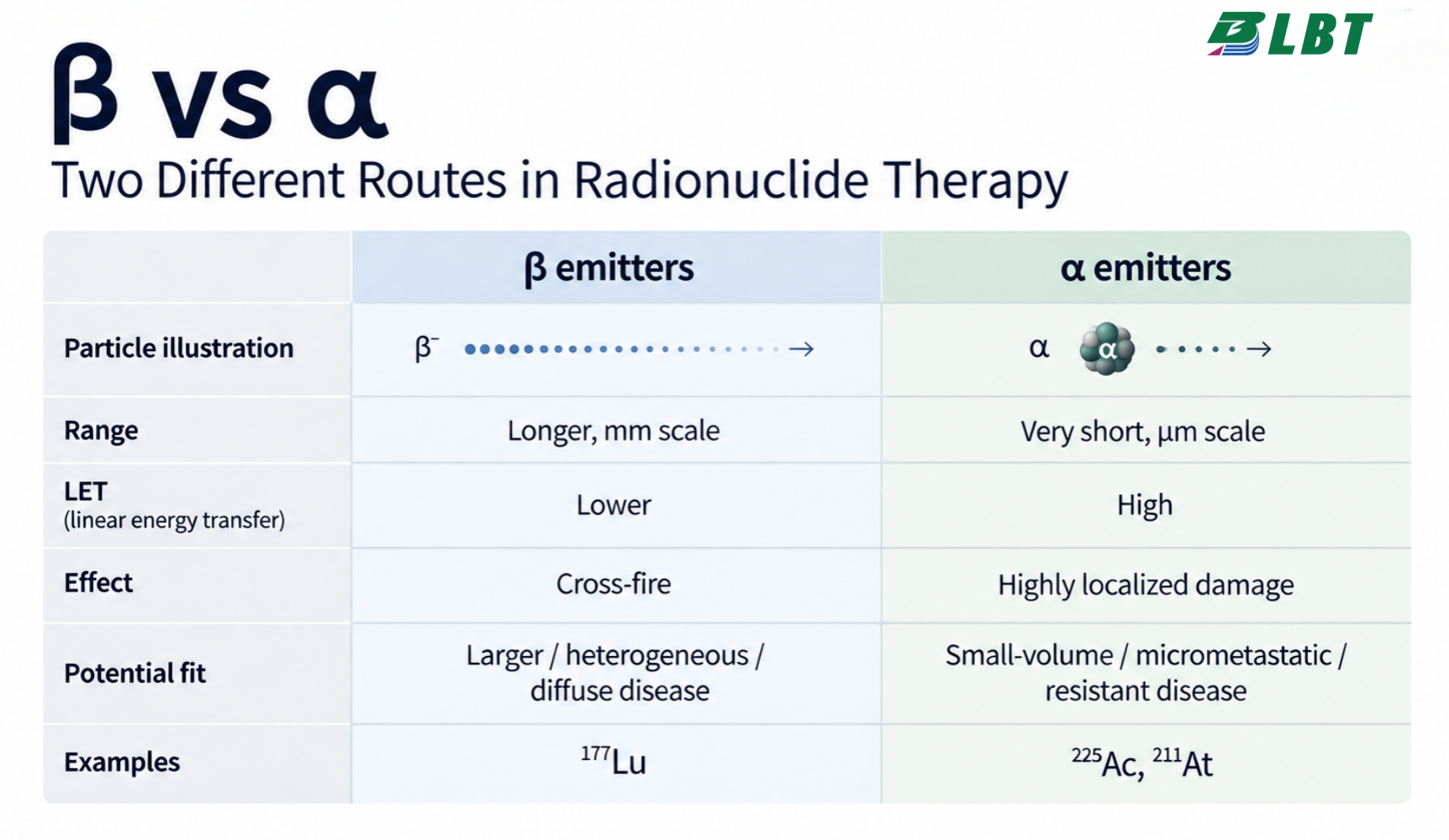
Their differences in particle range and linear energy transfer (LET) lead to different biological effects and, ultimately, different therapeutic strategies.
🔵 β Emitters: Wider Range, Cross-Fire Effect
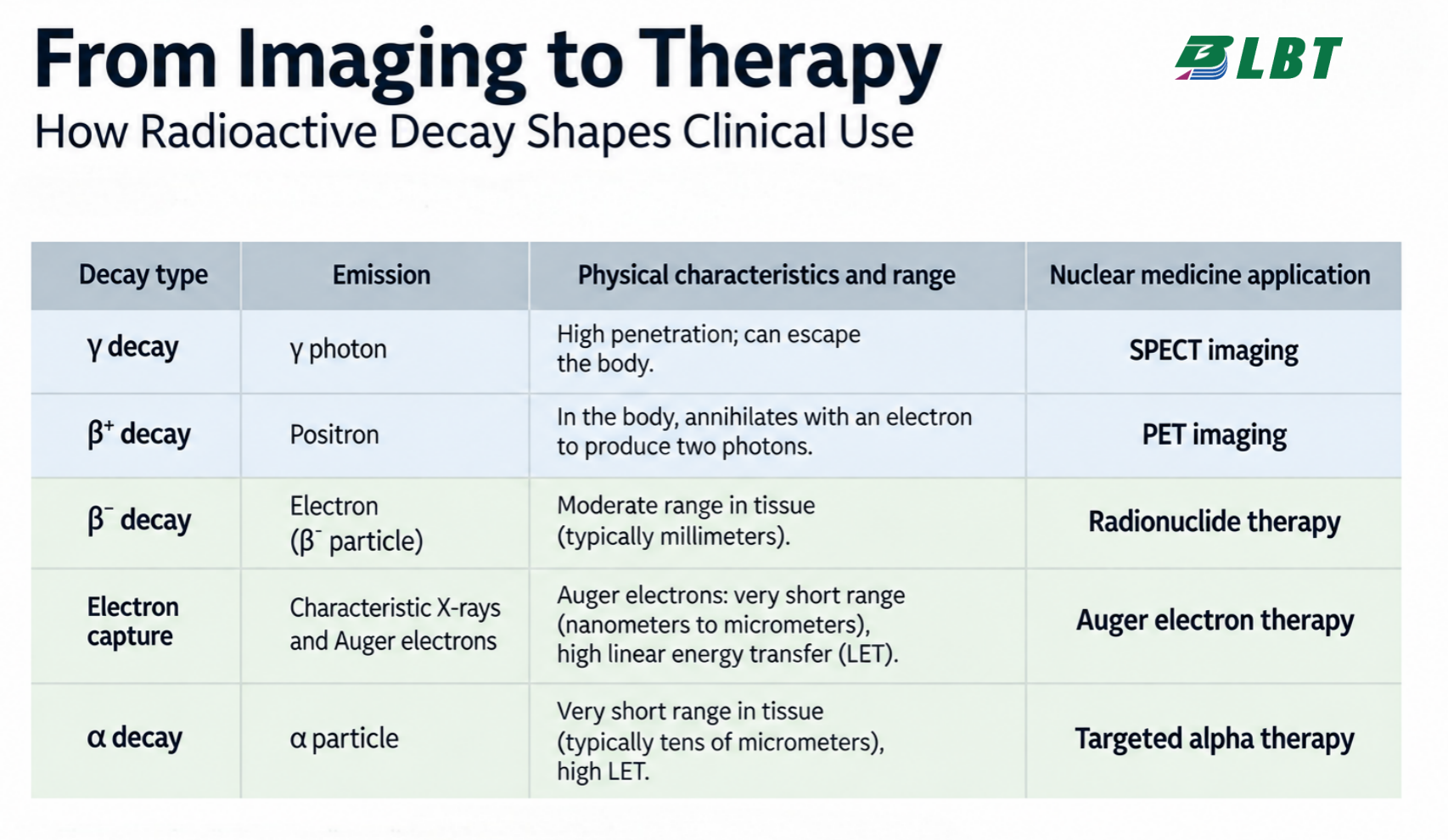
Beta particles travel relatively farther through tissue—typically from fractions of a millimeter to several millimeters.
This allows radiation to reach not only targeted cells but also nearby tumor cells, creating the cross-fire effect.
This wider radiation range can be useful when treating larger, heterogeneous or more diffuse tumor burden, where not every tumor cell may receive the radiopharmaceutical equally.
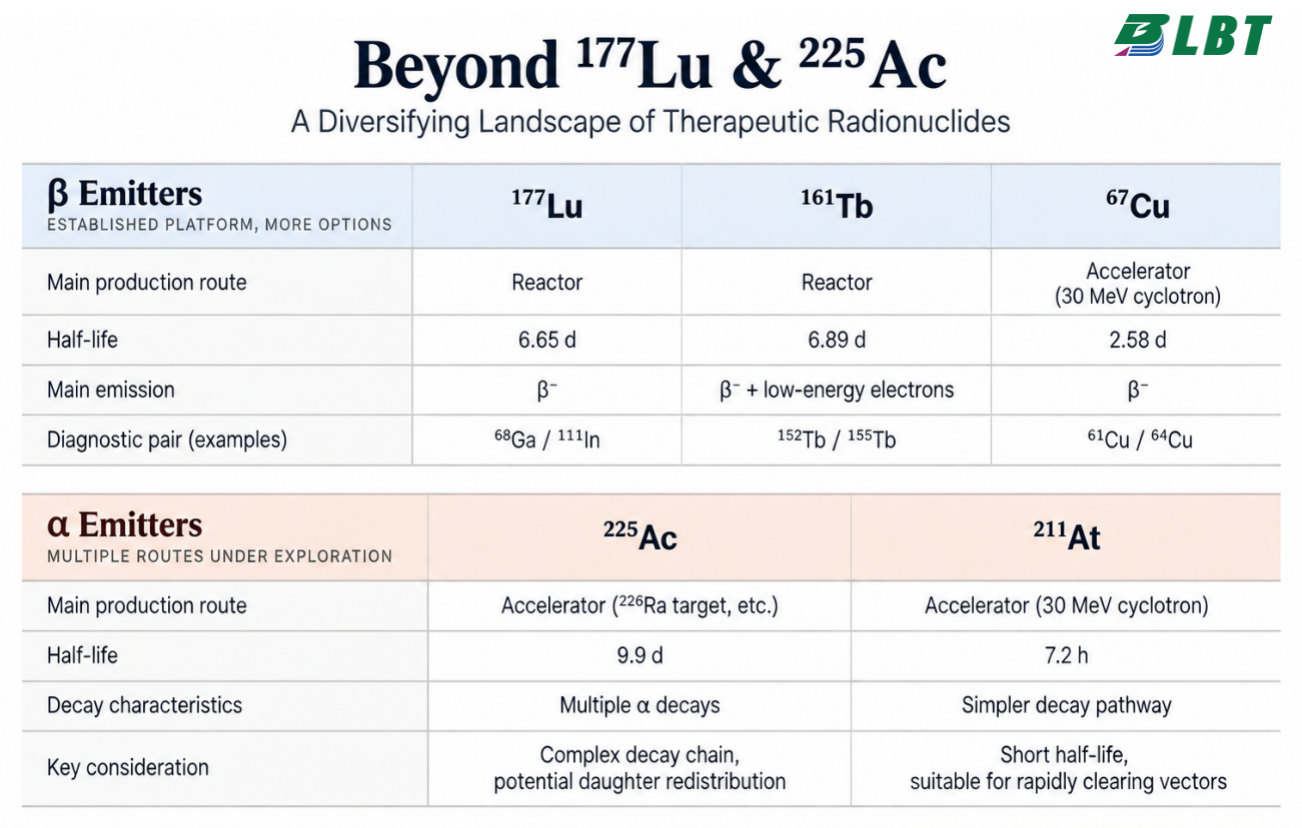
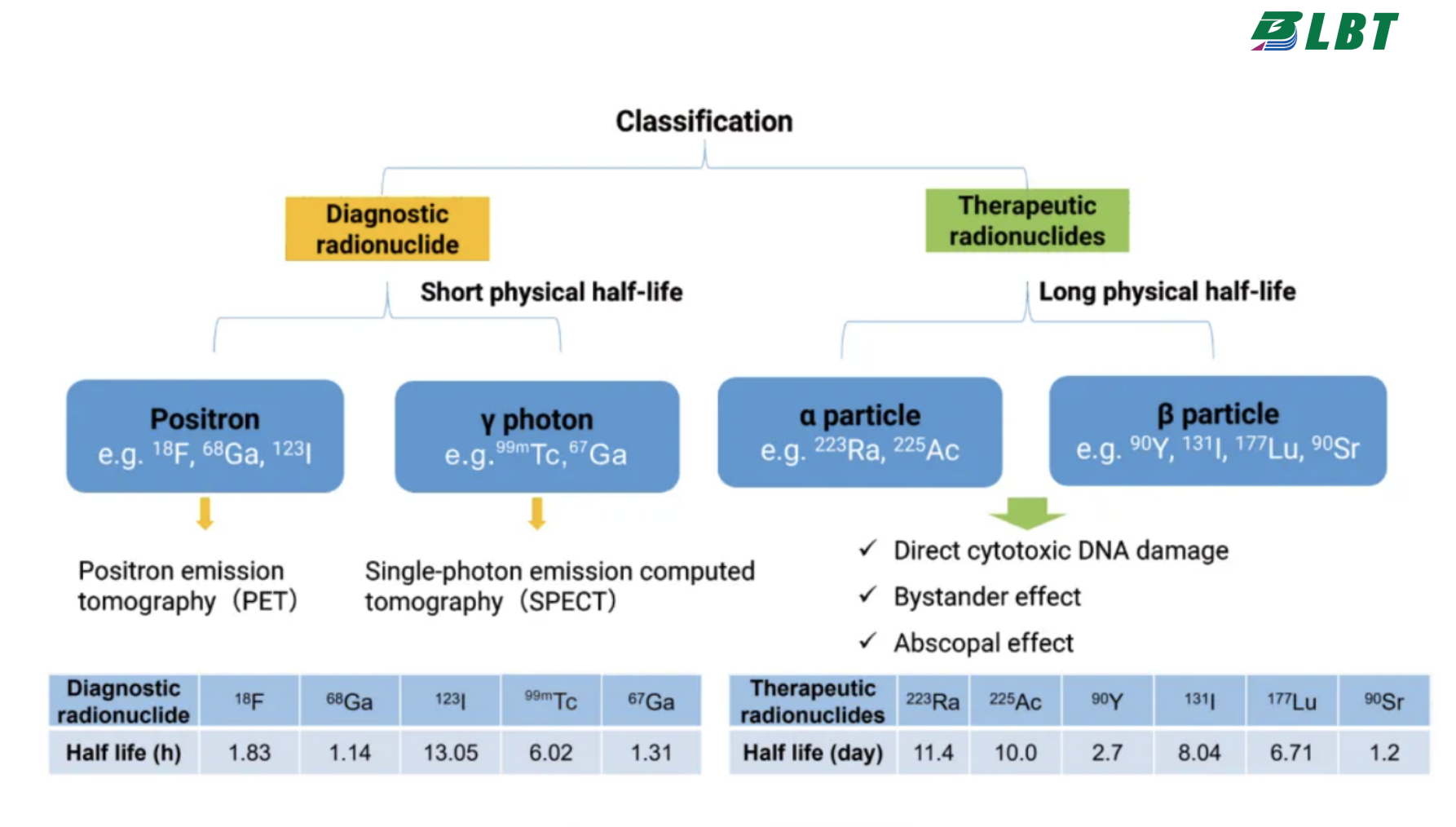
¹⁷⁷Lu is currently one of the most established β-emitting radionuclides used in targeted radionuclide therapy.
🟣 α Emitters: Short Range, High LET
Alpha particles behave very differently.
They travel only a very short distance in tissue—typically less than 100 μm, roughly a few cell diameters—but deposit a large amount of energy along that path.
Their high LET can cause severe DNA damage, including difficult-to-repair double-strand breaks.
This makes α emitters particularly attractive for small-volume disease, micrometastases and treatment-resistant tumor cells, where highly localized energy deposition may be advantageous.
Radionuclides such as ²²⁵Ac and ²¹¹At are being explored in this field.
⚖️ Complementary, Not Competing
The difference can be summarized simply:
β → Longer range · Lower LET · Cross-fire effect α → Shorter range · Higher LET · Highly localized damage
Neither approach is universally better.
Their different physical properties make them suitable for different therapeutic situations—which is why β and α emitters should be viewed as complementary rather than simply competing routes.
As targeted radionuclide therapy continues to develop, understanding these differences will be essential for matching the radionuclide, targeting molecule and clinical application.